
How To Prepare A Car For Customs Inspection Transporting a vehicle from one side of the border to another is only possible when it gets inspected by customs authorities first. Such customs inspections exist to verify vehicles conform with local legal, safety and import regulations before being granted permission entry into another country. These checks serve to ensure ownership, papers and illegal possessions. The benefits of Preparation a complete Plan ensure your inspection will go smoothly in an anticipated matter.
To guard against theft, to verify compliance and prevent a threat from being imported on the nation’s roadways or into its living rooms; customs agencies target vehicles with an eye towards public safety as well. The preparation process for the vehicle changes slightly depending on whether it is being imported.
Table of Contents
Why Customs Inspections Matter and What Officers Look For
Vehicles must undergo customs inspections when being imported and exported from the country. Officers ensure that the car complies with legal regulations and its ownership is properly recorded. They will also verify compliance safety, any remaining recalls; they may inspect for contraband or undeclared items. Knowing these goals of inspection, users can prepare well.
A great many vehicles are inspected, generally through an in-person visit where officers will examine the VIN and as well interior/exterior components to verify that aftermarket items still perform just like stock pieces, along with documentation. While others may need emissions inspections or mechanical evaluations.
Key Customs Inspection Areas and Their Purposes
| Inspection Area | Purpose | Common Issues Found |
|---|---|---|
| Vehicle Identification | Confirm VIN matches documents | VIN mismatch, damaged/unreadable VIN plate/label |
| Ownership Documents | Verify legal ownership and transfer paperwork | Missing title/registration, incomplete purchase/transfer docs |
| Interior & Cargo Check | Ensure no prohibited/undeclared items are inside | Personal belongings left behind, food/liquids, restricted/prohibited items |
| Physical Condition | Confirm vehicle is safe and compliant for transport | Fluid leaks, worn/underinflated tires, broken lights, battery issues |
Security should come first and Customs inspections are very great. They also assist in preventing fraud and enforcement. Since you know what is involved in customs inspections, it will assist in making your car prepared for a customs inspection.
They are canada by canada and inspections will vary. But they pretty much all do the same thing. That is empowering b/c it lets you feel more in control of what is going to happen.
Detailed Process: Step-by-Step Customs Preparation Requirements
Before you can send a car through customs, cleaning and straightening are not enough. Consist of documenting, mechanical preparedness and verification checks. With this type of comprehensive switch, it is important that customers follow a methodical process to catch everything.
Essential Documentation Required
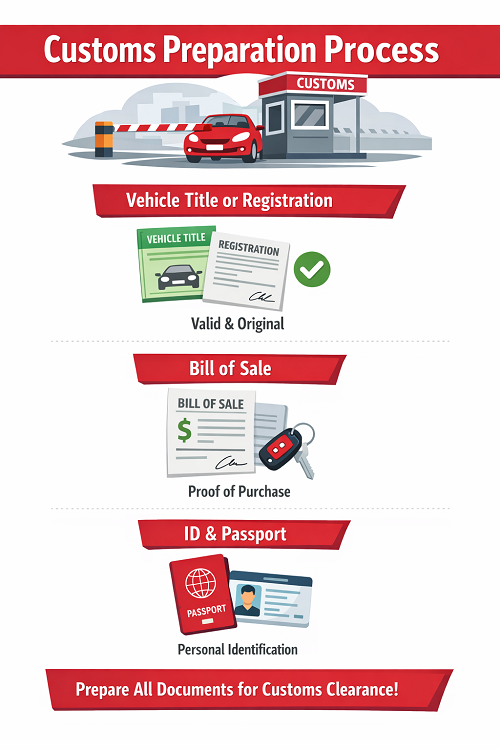
The cornerstone is the exact papers Custom clearance
Vehicle Title or Registration:
Original dear mark must be valid and legible.
Sale Bill Acknowledgment of Purchase
Verifies transaction data and amount for tax reporting purposes
Government Identification:
To pass the border, you will need your passport or equivalent identity card.
Step-by-Step Breakdown of the Vehicle Preparation Process
1. Clean the Vehicle Thoroughly:
The VIN, interior and exterior must be clearly visible to officers. A dirty car might provoke thoughts of secret, concealed items.
2. Remove All Personal Belongings:
Customs also forbids any personal goods in the cabin or trunk of a motor vehicle being presented for inspection.
3. Check Vehicle Condition:
Check tire pressure, lights and for leaks Some agencies reject unsafe vehicles.
4. Prepare the VIN for Inspection:
The plates should be clean and legible Officers will then check that information against documentation.
The process is explained in detail and customers who just need to follow these steps carefully can learn how to prepare a car for customs inspection. Being prepared in advance makes the process smoother and reduces last minute checks.
Comparison of Customs Preparation Methods, Real Examples
Levels of preparation can impact the speed and detail of an inspection. If they prefer so, customers may select basic cleaning or full detailing upon arrival at a customs checkpoint, as well as receive help from an expert to check the vehicle.
Quick Facts Box
- ✔A clean, sanitized vehicle can speed up inspection because it’s easier to check quickly.
- ✔Removing all personal belongings helps avoid delays from extra questioning or item checks.
- ✔Being organized and “inspection-ready” can reduce the process to just a few minutes.
- ✔Dealerships exporting multiple cars often use professional prep services to streamline approval.
- ✔Professional preparation can lead to faster customs processing, especially in bulk shipments.
Although it is the same car Shipping preparation we are doing, they require a completely different order of steps. Basic cleaning is cheap but does not cover everything. A full detailing can also help to bring out any potential mechanical or cosmetic issues. Knowing these options assists customers to budget and plan How To Prepare A Car For Customs Inspection on their own.
Practical Tips: How to Prepare, What to Avoid & Step-by-Step Guidance
Correct preparation of the car will save you a lot of problems and time at customs. Get the Proven-methods or Tricks that you can follow to prevent your document gets missed, items are hidden inside and other things which is a cause of lost time.
How to Choose the Best Preparation Method:
- Consider the value and complexity of your vehicle.
- Evaluate whether mechanical checks are needed.
- Choose full detailing if VIN visibility is limited.
- Use professional services if deadlines are strict.
Once the preparation method is chosen, customers must take further actions to comply with customs expectations.
Steps to Prepare Your Car for Inspection:
- Take all things out of the cubby holes.
- Clean interior and exterior thoroughly.
- Make sure the tires, lights and battery are working.
- Photograph the vehicle before inspection.
Exporters must also verify customs shutdown hours, types of inspections and acceptable forms. While some locations require appointments, others allow for digital or drive-up inspections. Checking ahead avoids unnecessary travel.
Customs preparation also includes ensuring the vehicle has no recalls, or liens. Any outstanding recalls may prompt agencies to require additional documentation. In the event that one is required, customers should speak with their vehicle manufacturers to receive a recall clearance letter.
Final Recap
So in the Canadian Car Shipping preparation of a vehicle for customs inspection is something that follows few instructions and this makes it structured process in which attention to detail, correctness of documentation including also good condition. So, this guide explained critical inspection areas, steps to take compare and how you can prepare a car for customs clearance.
Keeping evictor out facilitates thorough cleaning, avoidance of delays and proper recording. Inspection readiness helps insulate customers from surprises like VIN mismatches or safety issues. Prepping makes it possible to have convenient fast or cost-efficient cheaper meals depending.
If customers know what customs officers are looking around for, then they can stay out of trouble and pass these inspections with confidence. Understanding How To Prepare A Car For Customs Inspection is crucial for the smooth running of vehicle imports, exports and general cross-border movements.
