

Car shipping terminals are integrated transport industry facilities that serve as vehicle drop-off and inspection points, a logistics hub for loading onto carriers, and as a tool to minimize scheduling disputes between shipping companies, as well as assist with the shipping of long distances. Terminals are also often used for seasonal shifts, dealer transfers, and personal moves since they offer secure and orderly storage.
Terminals are located in and next to major metro areas and transport corridors, making open and enclosed carriers more accessible, and providing both regulated handling standards and convenience for Car Shipping Terminals. This allows customers to gain predictability, to reduce delays, and to have a greater choice of when to ship their vehicles.
Table of Contents
Benefits of Car Shipping Terminals
Using Car Shipping Terminals has many operational and logistical benefits including wider time windows, as well as a higher quality level of service. They also act as a solid hub for load consolidation, enabling carriers to group multiple vehicles to be transported in a timely fashion, rather than making numerous pickups along a route.
Another advantage is increased accuracy of inspection. The terminal has inspection stations, where inspection personnel can inspect vehicles, enter diagnosis, record results, and identify customers. Such controlled environments help minimize disputes and increase transparency throughout the transport process.
Maintaining security is another advantage; terminals can employ gated security access, security cameras, and secure holding areas. When a vehicle is out of service, the Car Shipping Terminals securely hold the vehicle until it is picked up or shipped to its destination. This option offers better safety than residential areas or unattended lots and provides a more reliable, efficient solution for multi-vehicle or long-distance moves.
| Feature | Terminal-Based Shipping | Door-to-Door Shipping |
|---|---|---|
| Scheduling Flexibility | High | Moderate |
| Security Level | Controlled Facility | Varies by Area |
| Cost Efficiency | Often Lower | Sometimes Higher |
| Convenience | Moderate | High |
| Carrier Availability | Expanded | Limited in Some Regions |
| Inspection Quality | High | Inconsistent |
This comparison assists customers in determining whether Car Shipping Terminals suits their travel schedule and security and style preferences.
Tools or Resources Needed – Car Shipping Terminals
Customers should have a terminal address and terminal communication and confirm appointments before shipping to a terminal. Other tools or considerations that can be useful include more accurate navigation tools that avoid late arrivals at difficult points of access (eg. large logistics facilities could have multiple points of access).
Quick Facts
- Located within major metropolitan and port regions
- Provide safe and secure drop-off and pick up
- Increased flexibility in scheduling and routing
- Support loading of open and enclosed carriers
- Provide structured inspection environments
- Minimize delays in remote pickup areas
It is usually wise to make electronic copies of registration documents, identification and any booking confirmations, as check-in at many terminals is now electronic, making electronic material more easily transportable. Furthermore, customers with a cell phone possessing a functioning communication plan can contact staff or carriers directly through it with such problems.
Alternatively, customers may make use of transport companies‘ online portals to check schedules, upload documentation, or track their transport. Making use of online services can smooth communications with Car Shipping Terminals.
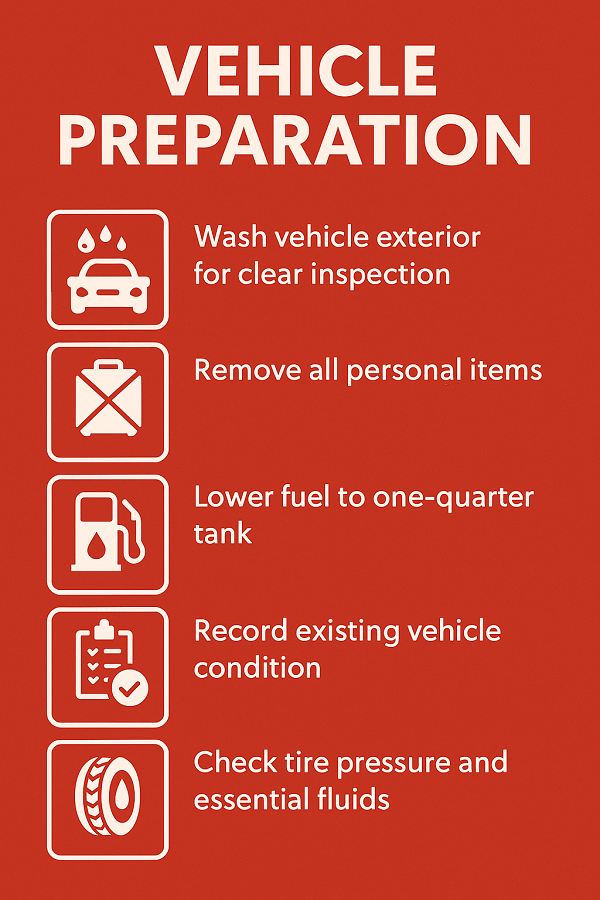
Vehicle Preparation
- Wash vehicle exterior for clear inspection
- Remove all personal items
- Lower fuel to one-quarter tank
- Record existing vehicle condition
- Check tire pressure and essential fluids
Documentation Preparation
- Bring registration and proof of ownership.
- Carry personal identification
- Booking confirmation and reference numbers.
- Understand terminal operational hours
Appointment Preparation
- Be on time for the drop-off
- Verify access instructions
- Follow all staff instructions to the staging area
Please follow the steps above to help ensure that Car Shipping Terminals can process your vehicle as quickly as possible.
Industry Trends
Auto transport industry data shows increasing use of Car Shipping Terminals, as the auto transport industry grows, relocations, inventory allocations and seasonal travel demand shift logistics volumes into terminals. Newer terminals use technology with digital inspection systems, automate gate control and use software for improved yard management, also they increase throughput.
Sustainability also affects facility operations using features such as energy-efficient lighting, environmentally friendly loading equipment, and terminal designs that promote efficient traffic flow becoming common in new terminals. Carriers utilize telematics, GPS coordination. Carriers utilize mobile reporting devices to improve on-time arrival and communication. As customer needs evolve, terminals implement faster processing protocols, redesign storage layouts, and streamline documentation procedures to stay competitive in the rapidly changing transport market.
Summary – Car Shipping Terminals
Car shipping terminals provide customers with a more organized, safe, efficient, and controlled service. As a result of process centralization, the terminal can perform better inspections and schedule more easily. If customers properly prepare using the right documents and knowing the procedures with available services. They could experience Car Shipping Terminals much more smoothly.
By booking in advance and working with a professional auto transport company, you can help schedule, find best routes, and ship reliably. Begin today with a reputable auto transport company contact.
Frequently Asked Questions:
1. What services do car shipping terminals provide?
2. Are terminals more secure than home pickup?
3. Is terminal-to-terminal shipping cheaper?
4. What should I bring to a shipping terminal?
