
A Canadian bonded warehouse is an important component of the import and export industry, especially for businesses that deal in international trade. This allows storage of goods without payment of taxes or duties, but at some point the costs must be paid to allow for distribution. If you are new to warehousing or trying to optimize a supply chain, understanding what a bonded warehouse in Canada is and how it functions. In our guide, we help you learn the basics, different types of bonded warehouse and how you can use these services for better management of logistics.
Table of Contents
Overview of Canadian Bonded Warehouse
A Canadian bonded warehouse is a safe storage area authorized by the Canada Border Services Agency (CBSA) where goods can be stored temporarily without incurring customs duties and taxes. Businesses that wish to use Canada as a temporary storage site for goods that will be shipped to another country or the Canadian market can also benefit from this scheme. Items of any kind deposited in a warehouse that is bonded are subject to tight regulation and supervision. In other words, they must comply with Canadian customs laws.
What Is a Bonded Warehouse?
A bonded warehouse is a secure store where goods may be kept for a period of time without payment of duty. Until they are removed and the relevant duties and taxes are paid, customs authorities control the goods in our custody. This system will help businesses to manage their cash flow better as they will be able to defer payment of duties till the release of goods.
Why Are Canadian Bonded Warehouses Important?
- Using a bonded warehouse allows a business to defer the payment of duties and taxes on goods that are imported into Canada. Such goods will not incur duties and taxes until they leave the bonded warehouse (enter the Canadian market) or are exported from Canada.
- Flexible Storage Options: Companies can store goods for a prolonged period without incurring charges and they get more flexibility when it comes to the release or sale of goods.
- Bonded warehouses allow storing goods at strategic ports to help speed up International trading and also enhance efficiency and quicker deliveries of goods.
Detailed Aspects of Canadian Bonded Warehouses
In the following section, we will go into detail about Canadian bonded warehouses, covering the types of warehouses, the rules surrounding them, and their benefits.
Public Bonded Warehouse
Private firms own public bonded warehouses that the CBSA authorizes. Several customers benefit from this type of storage, and the owner gets paid based on the volume of storage. Businesses that require short-term storage solutions or do not have the capital to invest in private warehousing usually employ them.
Private Bonded Warehouse
A private bonded warehouse is owned by a single business and run by it. This option is usually preferred by large organizations that store high volumes of items for a long time. Although more controllable and flexible for the business, private bonded warehouses are high on setup and operational costs.
Customs Bonded Warehouse
Special warehouses that are under government control to store goods are considers a customs bonded warehouse. Generally speaking, the goods in these warehouses are in transit. Moreover, duty on goods is deferred until the goods leave the warehouse or they are imported into Canada. The best option for products and services that are in the commercial stream and require flexibility before entering the Canadian domestic market.
Benefits of Using Canadian Bonded Warehouses
- The best benefit that a bonded warehouse can provide is the deferment of duties. It means a business need not pay duties until its goods are sold or leave the warehouse. Can help businesses’ cash flow and delay costs.
- Many companies use warehouses for consolidation of shipments so that the total number of shipments will be reduced.
- International commerce flexibility: Bonded warehouses offer the flexibility to store goods until they are required, allowing businesses to adjust their inventory management and shipping schedules in response to market demands.
Comparison of Bonded Warehouses vs. Non-Bonded Warehouses
To better understand the unique advantages of Canadian bonded warehouses, here’s a comparison of bonded vs. non-bonded warehouses:
| Feature | Bonded Warehouse | Non-Bonded Warehouse |
|---|---|---|
| Customs Control | Under CBSA control | No customs oversight |
| Duties and Taxes | Defer payment until release | Duties paid upon importation |
| Duration of Storage | Can store goods long-term | Generally for short-term storage |
| Cost | Cost-effective for deferred payment | Higher upfront costs due to duty payment |
Cost Comparison Between Bonded and Non-Bonded Warehouses
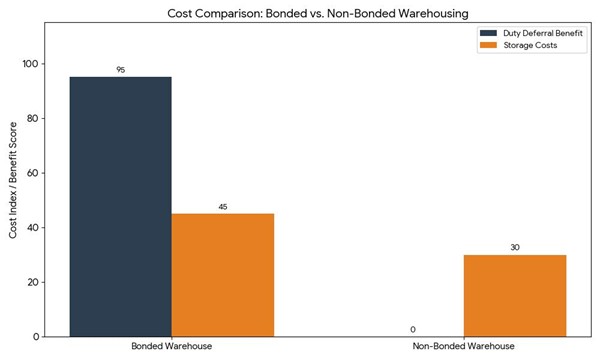
- SEC: Massive Cash Flow Benefit from Bonded Warehouses Duty is only payable when the goods are sold. This allows businesses to keep their working capital intact.
- The use of bonded facilities will, however, increase storage costs, as the cost of storage is slightly higher than the normal cost. This is because there are higher security arrangements and measures taken to ensure regulatory compliance. On the other hand, the savings on duty due to deferment far exceed the slightly higher storage cost.
- Zero Deferral in Non-Bonded: All duties and taxes must be paid immediately, on all high-value imports, on arrival at the non-bonded warehouse.
Practical Tips for Choosing a Canadian Bonded Warehouse
If you’re looking for a Canadian bonded warehouse for your business, there are a few things that you need to keep in mind.
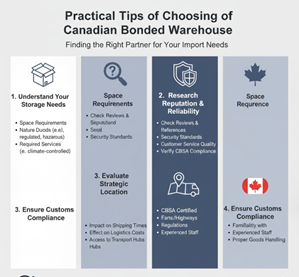
Understand Your Storage Needs
Also, it is vital to determine the nature of the goods. Various warehouses have various security, space and other kinds of warehouses. Therefore, you need to find the right type of warehouse.
Research the Warehouse’s Reputation
Not all warehouses offer the same level of security and service. Research potential warehouses to find one with a strong reputation for reliability, security, and customer service. Check reviews, ask for references, and verify their compliance with CBSA standards.
Evaluate the Location
Depending on the position of your bonded warehouse, slow shipping times may be incurred. When selecting warehouse in Kenya, it’s advisable to ensure that it is well positioned. That is, choose a warehouse that is strategically positioned close to any of the airport, seaport or road network. Delays and total logistics cost will reduce because of this.
Ensure Compliance with Canadian Customs
When selecting a bonded warehouse, ensure that that warehouse is duly compliant with Canadian customs regulations and has certificates from CBSA. An established warehouse will have experienced staff who will know about the customs procedure which will handle things properly.
Efficient and Secure Storage with Canadian Bonded Warehouses
Canadian bonded warehouses are a great option for businesses that deal with international trade. These warehouses offer security, flexibility, and the ability to defer duties and taxes. Whether public or private – bonded warehouse, their advantages and regulations may enrich your logistics and supply chain. Canadian Car Shipping choosing a bonded warehouse, businesses can enhance their cash flow, decrease costs, and optimize their shipping schedules.
When searching for a bonded warehouse Make sure the warehouse you choose has the space you need either for the short or long term compliance with Canadian customs rules and the right security and flexibility for your goods. By partnering with the right warehouse after adequate planning, your business can enhance its efficiency in the international business operation.
