
As per recent news from the Canadian Government, Canada is all set to go all-electric vehicles by 2035. Here’s why you should care and what this means for gas cars.
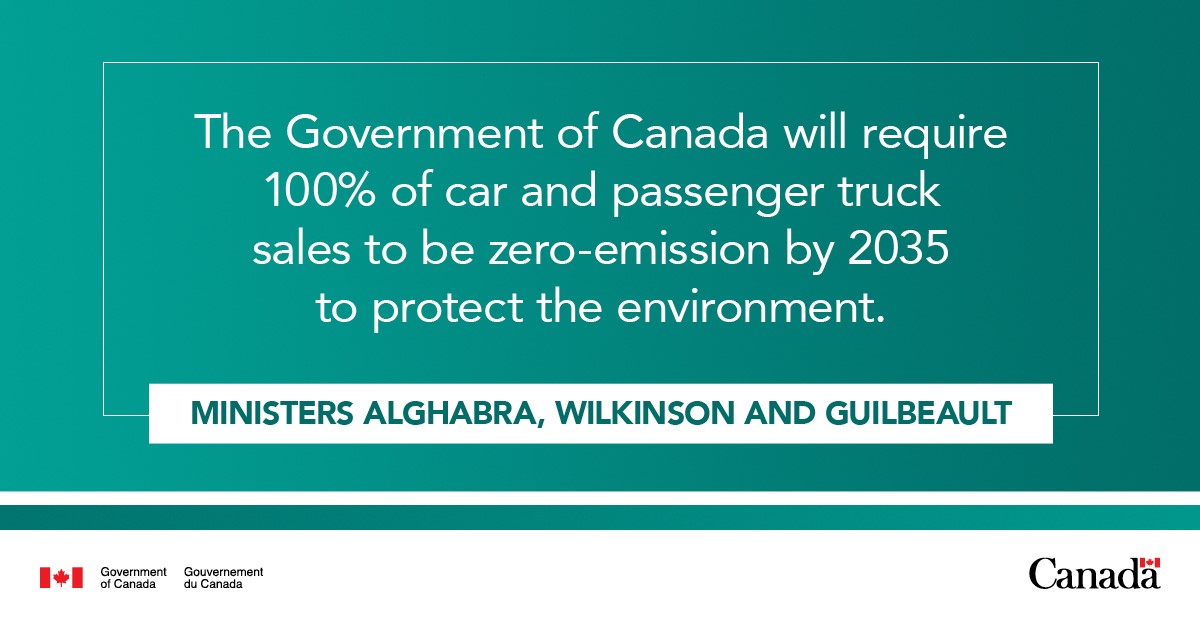
The Canadian Government has announced that all new vehicle sales will be electric by 2035. The move is in response to concerns about climate change and emissions.
This announcement is a major step forward for the electric car industry, and it’s sure to help make vehicles more affordable.
It’s also good news for the environment since electric cars are much more environmentally friendly than traditional cars.
Table of Contents
Why is Canada Going all Electric Vehicles?
Source: Canada.ca
Reduction in Fuel Import:
At present, Canada imports more than half of the oil used in Atlantic Canada and Quebec from Saudi Arabia, the U.S, Russia, the U.K, Nigeria, Ivory Coast, and Azerbaijan. This constitutes a whopping $19 billion.
If Canada moves towards greener alternatives like solar energy use, it can significantly reduce its import of oil and reliance on foreign fuel.
Fighting Climate Change:
Canada is a cold region, and change in climate significantly impacts its temperatures. This change also impacts the living conditions and the economy as it disrupts the supply chain, damages factories, disturbs transport, and so on.
So the #1 reason for going full green and adopting electric vehicles as a part of this campaign is to stop or even reverse the adverse effects of climate change.
Reducing Transport Pollution:
Did you know that a quarter of Canada’s greenhouse gas emissions come from the transport sector of Canada? Furthermore, more than half of these toxic gases are released from light-duty vehicles like passenger cars, pickup trucks, and SUVs.
By adopting electric vehicles and getting rid of their fuel-dependent counterparts, Canada can significantly reduce carbon footprint and environmental pollution and improve air quality.
Reducing Driving Costs:
The supply chain is a critical part of Canada’s economy, from transport trucks to cargo trains and passenger vehicles, transport, and the supply chain is a big contributor to the economy. However, the fuel cost to operate all of these heavy-duty vehicles is significantly high.
If Canada shifts toward the more affordable and renewable eco-friendly alternative, it can save billions of dollars in supply chain operations.
What Does Going All-Electric Mean for Gas Cars?
The Canadian Government has already invested over $1 billion to support the adoption of zero-emission vehicles. $587 million of this investment went towards a zero-emission vehicle incentive program and $460 towards building a network of fast-charging stations (over 16,500) from coast to coast.
If the country is spending this much money and time on adopting nationwide electric vehicle use, then it’s evident that they’re going to get rid of fuel-dependent vehicles eventually. They’ve even invested millions of dollars in Ford to produce electric vehicles in Canada.
Benefits of Getting Electric Vehicles vs. Its Gas-Consuming Counterpart:
The Government’s reasons for going electric discussed above will benefit the Canadian nation as a whole. Besides these, there are some individual benefits that every Canadian shifting to electric vehicles will get; some of them are:
Low Cost of Maintenance:
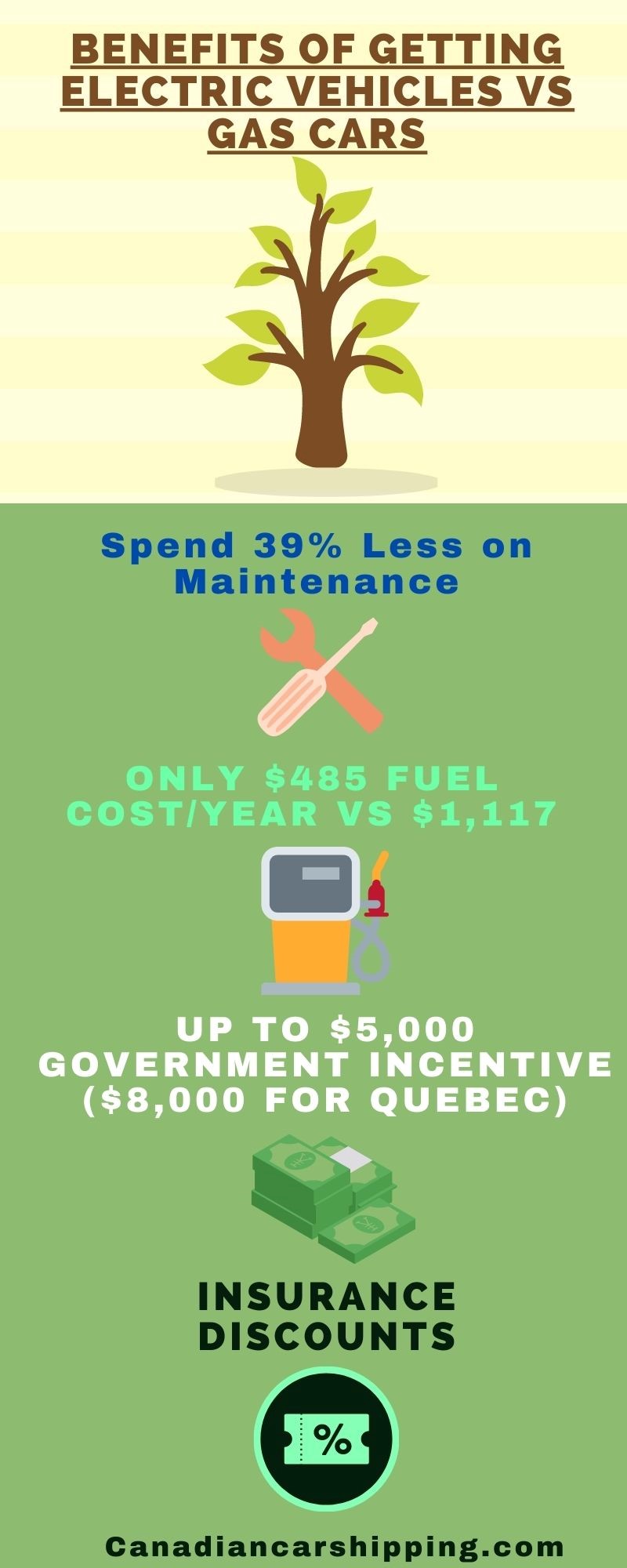
According to a study by Energy.gov, servicing electric vehicles costs around 39% less than fuel vehicles.
As per their report, EVs cost 6.1 cents per mile to maintain while combustion engine vehicles cost 10.1 cents per mile.
Low Cost of Fuel:
The cost of fuel required to drive a gas-powered vehicle on average is $1,117 per year, while electric vehicles cost $485 per year (University of Michigan).
The difference is HUGE, and that’s one of the main reasons why many Canucks would prefer going green.
Government Incentives:
The Government of Canada launched iZEV (Zero Emission Vehicles) program, which offers incentives to everyone purchasing or leasing electric cars. The point-of-sale incentives include:
- Long-range plug-in (at least 15kWh capacity), battery-electric, and hydrogen fuel cell vehicles can get up to a $5,000 incentive.
- Short-range plug-in vehicles (at least 15 kWh battery capacity) are eligible for up to a $2,500 incentive.
- Quebec offers up to $8,000 incentive
Here’s the eligibility list of the vehicles for the iZEV incentive program.
Affordable Insurance:
Several insurance companies reward EV drivers with up to 20% rebates on their auto insurance. However, you will not see the prices for insuring EVs upfront.
So make sure to ask the company whether they have any discount for EV owners and check and compare quotes afterward.
Exclusive Benefits:
Some Canadian provinces like Ontario and Quebec offer green license plates to plug-in hybrid or all-electric vehicle drivers. This means depending on their location; they can get certain benefits like:
- Free toll roads and ferries access
- Reserved or free parking spots in various locations
- Access to reserved lanes
The Government has already decided to ban gasoline vehicles after 2035, so sooner or later, you’ll have to make the switch. We suggest doing so now when the EVs are still not in very high demand so you can get them at a relatively lower cost as opposed to what they may cost 10 years later.
What are The Best Electric Vehicles In Canada Right Now?
There are hundreds of electric vehicle models, and they have their strengths in different areas. Let’s see the best EVs in Canada right now in specific categories:
Highest Range:
- Tesla Model S: The Model S is the king of the road when it comes to driving range. Its 2022 variant offers a whopping 652km range with just 2.0le per 100kms.
- Tesla Model X: Tesla made a range of X variants from 2016 to 2022, and their Long Range Plus Model or X series that came out in 2021 offers a whopping 597km range.
Most Energy Efficient:
- Tesla Model 3: The low consumption King in Canada, the Model 3 is rated a 1.8 LE/100km for the city and 2.0 LE/100km for the highway.
- Hyundai Kona Electric: Hyundai Kona is also an excellent choice with a 1.8 LE/100km city rating and 2.2 LE/100km highway rating.
Overall Best Value for Money:
- Hyundai Ioniq Electric: The 2017’s Ioniq has a low range of 200km, but it only costs $20,000 give or take. Plus, its fuel consumption is just 1.7 LE/100km.
- BMWi3 2016-2017: Although it has only a 130km driving range, it has a low 1.9 LE/100km consumption rate and an impressively low $21,000-$27,000 price tag.
What car company is going all-electric by 2035?
Many companies and their brands will go all-electric by 2035, including:
| Brands | Expected Year |
|---|---|
| Jaguar | 2025 |
| Alfa Romeo | 2027 |
| Lotus | 2028 |
| Bentley | 2030 |
| Cadillac | 2030 |
| Lexus | 2030 |
| Mercedes Benz | 2030 |
| Mini | 2030 |
| Rolls Royce | 2030 |
| Volvo | 2030 |
| Audi | 2033 |
| Chevrolet | 2035 |
| GMC | 2035 |
Frequently Asked Questions:
1. How much money would it cost Canadians to switch from gasoline-powered cars to electric vehicles by 2035?
2. When will all Canadian cars be electric vehicles by 2035?
3. How many electric vehicles are sold in Canada per year?
4. Will bio-fueled cars coexist with electric cars in the future?
5. Can Canadian Car Shipping help transport electric vehicles?
