

You need to do a fair bit of planning, documentation and import procedures when taking your vehicle across the border of a country. If you’re moving, getting a car, or switching ownership, Canada US Vehicle Import services help in the process. Canadian vehicle imports to the US are not uncommon, but they still have customs requirements, compliance requirements, and transport arrangements.
A common belief is that to import a car, you need to drive it across the border in a vacation. In truth, customs authorities have demand letters that evidence ownership, eligibility, and compliance framework. Not having the paperwork can cause delays and costs. Preparation is one of the most important parts of the process.
It is often the case that vehicle owners are assisted by professional transport companies in logistics and documentation. This assistance can ease the process especially for first-time importers.
This article guides you through the basics of importing a vehicle into the United States from Canada. It covers things like what documents are needed, how to get it transported, the preparations to make, and other considerations to help you import with ease.
Table of Contents
How Vehicle Importing Works Between Canada and the US
Importing a vehicle into the United States follows a set procedure to confirm its ownership and compliance with regulations. Though the process is well known, it still requires planning.
Every year, several vehicles cross between Canada and the United States. Some are personal vehicles that relocated with owners. Cars might be sourced from dealers, private sellers, and auctions. Companies also import vehicles for reselling or fleet expansion
The initial stage is to check that the vehicle can be imported legally. The required documentation is supplied, and transportation is arranged. For those planning a Vancouver vehicle import, understanding these steps in advance can help streamline the process. Once customs clearance is completed, the vehicle can proceed through the importation process.
Getting to know these requirements beforehand avoids complications. Individuals who have their documentation ready beforehand have convenient processing and quicker scheduling of transportation.
Using the services of professional shipper, the burden of carrying out logistics independently will also be reduced. Vehicle owners can hire transportation services instead of supervising every detail themselves.
Why do people import vehicles?
- Making a move from Canada to USA
- Purchases of vehicle from Canada.
- Business vehicle transfers.
- Collector and specialty vehicle buys.
Each circumstance may have slight variations in requirements. So, preparation is more important than ever.
A guide to documentation and compliance requirements
The key to every successful vehicle import is documentation. Officials of customs must establish the ownership of a vehicle and whether it is eligible for US entry.
Documents of Ownership and Customs
Ownership papers of any type of vehicle prove possession. These documents have to be true and correspond to all vehicles.
The title document is proof of ownership of the property. If the vehicle was just purchased, then a bill of sale may also be necessary. Customs officials scrutinize these documents before granting entry.
Depending on the vehicle and conditions of importation, further documentation may be required. When there are organized records, delays will decrease considerably.
The documents that are required most often include.
- A certificate of registration or ownership.
- Document for sale or purchase agreement.
- ID Card.
- Documentation for customs clearance.
During the import process, all vehicle owners must keep copies of all documents.
Vehicle Eligibility and Regulatory Requirements
No every vehicle is imported in the same manner Whether or not a vehicle is eligible depends on factors like their age, standards, and regulations.
Numerous vehicles for the Canadian market are quite similar to their U.S. versions making compliance easier. Importers must check requirements before booking transport
Vehicle labels, manufacturer information and technical specifications may be included in compliance reviews. Experienced transport companies that deal with Canada US Vehicle Import frequently assist customers with the requirements.
If anything is incorrect, you can fix it before transport starts, avoiding any problems.

Selecting Suitable Modes of Transport
After filing the necessary documents, the next step is deciding on the mode of transport. For individuals arranging Washington vehicle shipping, owners can choose between transporting the vehicle themselves or hiring a professional shipping company to handle the move.
Personal driving the vehicle may be simple, but it takes a lot of time, fuel, stays and travel planning. It’s more convenient and less stressful when shipping professionally.
Cross border shipping mostly uses open transport option. Cars are transported using multi-car carriers for long-distance travel. This method provides low-cost reliable equipment.
Enclosed transport protects the car from weather and road debris. Owners of luxury, collector and exotic vehicles often go for this.
Real-World Import Situations
Shifting BC family in Washington would opt for open transport considering budget constraints. A collector who imports a rare sports automobile may prefer enclosed transportation.
Professional shipping also rely on businesses. Inventory is frequently moved across the border by dealerships and fleet operators.
| Shipping Feature | Open Transport | Enclosed Transport |
|---|---|---|
| Cost Efficiency | 10/10 | 6/10 |
| Vehicle Protection | 6/10 | 10/10 |
| Availability | 10/10 | 6/10 |
| Scheduling Flexibility | 9/10 | 7/10 |
| Luxury Vehicle Suitability | 5/10 | 10/10 |
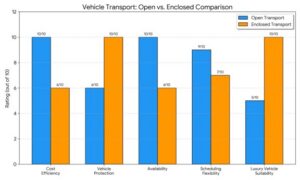
- Open transportation scores the highest ($10/10$) in terms of cost and availability of carriers, proving why it is the baseline, high-volume, standard for standard vehicle imports.
- The premium allocation strategy says that enclosed transport receives the highest possible rating ($10 out of 10$) in vehicle protection and suite luxury vehicles, while open transport gets a very basic protection rating ($6 out of 10$).
- The flexibility of open transport in particular is available at much higher rating (due to various multi-car cross-border carrier’s network) than enclosed which has strict timetable ($7/10$). The difference ($9/10$, $7/10$).
Getting Your Car Ready for Transportation
Getting ready is necessary for a successful vehicle import. An appropriately prepared vehicle is easier to inspect, move and clear customs.
Start off with a thorough vehicle cleaning. A clean exterior allows inspectors to more precisely identify existing scratches, dents, and cosmetic flaws. Before taking the photograph, pictures must be taken from different angles.
It is best if personal property is removed. Transportation carriers usually don’t allow personal items because they may create liability problems and increase weight.
Owners of vehicles must also perform a basic mechanical inspection. Before setting off, check the tires, brakes, battery, and fluid levels. It is easier to load and unload vehicles used for operations.
Preparation steps are recommended.
- Check the vehicle’s condition.
- Capture the current state of the vehicle.
- Take out the essentials and valuables.
- Keep your gas tank one-quarter full.
It is equally important to communicate with the transport company. Before the transportation starts, customers should agree on pick up schedules, delivery instructions and documents.
We should also consider accessibility. If residential street access cannot be safely accommodated for trailers, alternative pickup locations may be required for larger transport carriers.
Good preparation means transportation is easier and problems are less frequent in imports.
Planning for a Successful Import Experience
Vehicle owners that get documents ready, confirming compliance requirements and arranging transportation in advance are less likely to face delays.
An experienced transport provider makes the process far easier. Businesses with experience in international vehicle transfer know customs procedures, route selection, and import logistics. They often help reduce uncertainty and improve efficiency.
Careful comparison of transport is a must for any customer The cheapest quote may not always give you the best value. Trustworthiness, the ability to communicate, and prior expertise often matter more.
Advance scheduling may also increase flexibility. When you book transport in advance, it gives… As a result, pickups are usually smoother along with more predictable delivery timings.
In conclusion
The Canada US Vehicle Import process can be made much easier with the right preparation and reasonable expectations. With support from Canadian Car Shipping, getting to know what documents to have ready, how to transport the vehicle, compliance requirements, and preparation steps can make the process more efficient.
Careful planning is essential when importing the family car, luxurious vehicle, business fleet unit, or collector vehicle. When vehicle owners organize their documents early, select the right transportation method, and work with experienced professionals, they can navigate the import process confidently and achieve a seamless transition from Canada to the U.S.
